Tag Archives: programmer
Screen-Based Tests: Testing Graphics, Part 3
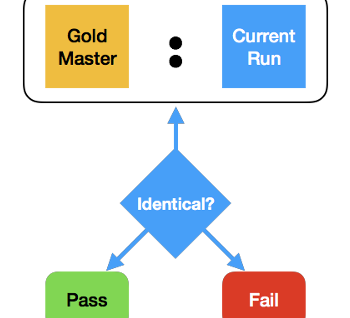
Screen-Based Tests: Two Extremes Screen-based tests focus on what’s visible rather than internal representations. We’ll consider two extremes for testing screen-based output: fully manual and fully automated. Then we’ll look at moves that can help you evolve from one to Continue reading Screen-Based Tests: Testing Graphics, Part 3
Hacker’s Delight (2/e) (Review)
Hacker’s Delight (2/e), by Henry S. Warren Jr., Addison-Wesley, 2012. Perhaps you’ve seen this trick for swapping two variables without using a temporary: x = x ^ y y = y ^ x x = x ^ y Or maybe Continue reading Hacker’s Delight (2/e) (Review)
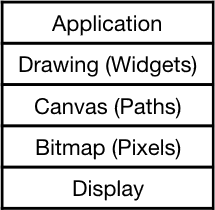
Display: Testing Graphics, Part 2
Coders at Work (Review)
Coders at Work: Reflections on the Craft of Programming, by Peter Seibel. ISBN 978-1-4302-1948-4. Peter Seibel interviews 15 programmers on a variety of topics. I liked the interviewing style: he asks a little biographical information, sprinkles in some standard questions Continue reading Coders at Work (Review)
Models: Testing Graphics, Part 1
Testing with Simple and Combinatorial Oracles
Oracles are things that can tell us whether or not a result is correct. For some tests, an oracle is as simple as comparing a couple strings or numbers. Other tests have many acceptable results and it’s harder to know what’s right. I Continue reading Testing with Simple and Combinatorial Oracles
When Software Smells Bad
Kevin Rutherford and I wrote this article for Better Software magazine; it was the cover article in the July/August 20122 issue. It demonstrates refactoring in Ruby, using a basic “todo” list application. “When Software Smells Bad” (PDF), by Bill Wake Continue reading When Software Smells Bad
Review: Structured Programming (Dahl, Dijkstra, and Hoare)
Structured Programming, by O.-J. Dahl, E.W. Dijkstra, and C.A.R. Hoare. Academic Press, 1972. This year (2012) is the 40th anniversary of this text, but it holds up well. It consists of three essays: “Notes on Structured Programming” by E.W. Dijkstra Continue reading Review: Structured Programming (Dahl, Dijkstra, and Hoare)
3A – Arrange, Act, Assert
Some unit tests are focused, other are like a run-on sentence. How can we create tests that are focused and communicate well? Arrange-act-assert is a pattern for good tests. What’s a good structure for a unit test? 3A: Arrange, Act, Continue reading 3A – Arrange, Act, Assert